I’m hearing a lot lately about the suffering of American farmers.
Agriculture isn’t very close to my family. Best I can tell, my ancestors stopped making a living off the land around 1880, when they left Zeeland for West Michigan. Dad had a vegetable garden he doted over, but we were suburban, living less than a mile from the city limits.
But I always had a soft spot for farmers. When I was little, I envied kids who got to grow up on a farm, surrounded by chickens and cows and goats. (My earliest knowledge of agriculture came via “Charlotte’s Web.”) I gained a more realistic understanding of farming when I was an agriculture reporter in Michigan and Arkansas. In Arkansas in particular, I got to know many poultry farmers who showed me how industrial-sized agri-corporations like Tyson Foods take advantage of family farmers. In Michigan, the Farm Bureau paired me with a farm family that I visited several times over a year, getting to know the rhythm of farm life, the personal and farming challenges they faced, and their triumphs.
I gained a new appreciation for farmers this summer, when I tried to grow vegetables myself for the first time. I celebrated each tiny tomato and misshapen carrot. I come away from that experiment this fall amazed that farmers are able to raise enough food to feed 8 million people. Honestly, it blows my mind.
But.
Cream of the crop
Watching farmers lately as they go public with their very real economic concerns and fear of facing bankruptcy, I have such mixed feelings.
Guys, what were you thinking?
I don’t mean to tell you your business — couldn’t if I tried — but some things are obvious. One of the biggest costs in farming is labor, especially around harvest time. One of the biggest sources of revenue is foreign trade. American farmers are world-famous for growing bountiful crops of soybeans and corn, and livestock like beef and pork. In fact, American farmers live and die by commodity prices and global trade. No exaggeration.
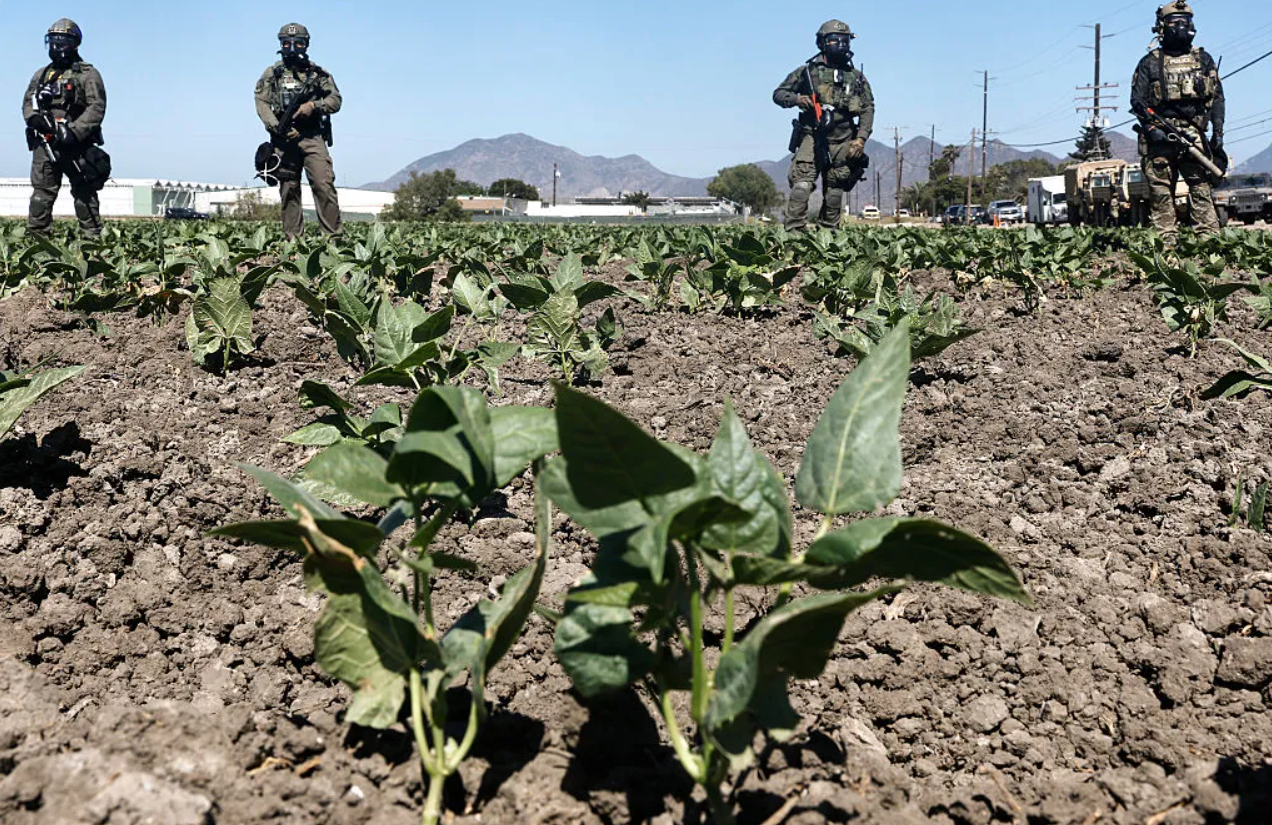
And this year, it’s mostly dying. Rabid raids by ICE agents have scared off many people who used to work on farms. Crops are dying in the fields because there is no one to pick them. Nebraska farms relied on undocumented workers for 42% of their labor. What do you imagine happens when they’re too afraid of ICE to go to work? Never mind, we already know.
“It really is clear to me that the people pushing for these raids that target farms and feed yards and dairies, have no idea how farms operate.” said Matt Teagarden, head of the Kansas Livestock Association. “You can’t just turn off a cow. It doesn’t work that way. Cows have to be milked, cattle have to be fed.”
Betting the farm
It doesn’t stop there. In the run-up to the 2024 election, Trump made it very clear that he intended to pursue tariffs on imports if he were elected. Maybe that sounded great to some farmers, who thought it might give them an edge competing against food grown in China, Mexico, Canada and elsewhere. If so, they didn’t stop long enough to have the next thought: what would those countries do if we did that to them? Well, now we know. They respond in kind. As a result, the #1 importer of American soybeans, China, won’t buy any of them this year. Instead, they turned to Argentina, signing contracts to get soybeans there instead. And that, after Argentina received a $20 billion bailout from Trump.
To make it clear: American soybean farmers lost their main customer to Argentina, and Trump thanked Argentina for that by giving them $20 billion. While American farmers literally lose the farm.
The China-Argentina-Soybean fiasco is just one example. But to return to Argentina: when Trump was asked to defend his bailout, he condescendingly told a woman reporter that Argentina was “dying,” and that maybe we should get our beef from Argentina to help them out.
How do you feel about that, Cattlemen?
Oh, we already now.
“The National Cattlemen’s Beef Association and its members cannot stand behind the President while he undercuts the future of family farmers and ranchers by importing Argentinian beef in an attempt to influence prices,” said National Cattlemen’s Beef Association CEO Colin Woodall. “If President Trump is truly an ally of America’s cattle producers, we call on him to abandon this effort to manipulate markets.”
How’d we get here?
At first blush, it would look like Trump is punishing American farmers, even though a staggering 77.7% of them in America’s top agricultural counties threw Trump their vote. Some way to say thanks, Don.
But if you look a bit deeper, these farmers are getting exactly what they asked for.
Trump made no secret of his plans for mass deportation — he even had signs made that raged “MASS DEPORTATIONS NOW.” Trump voters, even those farmers who knew they depend on undocumented workers to bring the crops in and to tend to the dairy herds, pulled the lever for him anyway.
Trump made no secret of is plans for tariffs. He kept insisting he loved them and understood them better than anyone, even as anyone who so much as took Econ 101 understands the cost of tariffs is always pushed off on consumers. Farmers were reminded how Trump tariffs hurt them in his first term, and though they faced the prospect of even stiffer tariffs, they went all in.
So Trump isn’t punishing American farmers. American farmers wanted him, and he’s delivering exactly what he promised. What’s that phrase? “Promises made; promises kept?” Looks like “threats made; threats kept” would be more accurate. The ultimate irony is that all this was made possible by the very voters he hurts.
Bumper crop of crap
Where did American farmers go wrong?
All they had to do was vote in their own best interest. The task was simple. Evaluate the aims and promises of each candidate, and suss out which one would treat your interests most kindly. American farmers bellied up to the table, considered the loss of their workers, the soybeans withering in the fields, the international customers taking their money elsewhere — farmers looked at all that and said, “sign me up.”
But why?
Was it racism, otherwise known as “white economic anxiety”?
Was it because they were terrified of transwomen? That ad about “They care about they/them; Trump cares about you” was a snazzy bit of marketing, sure. It allowed fear to win out over reason. Terror of trans kept many from bothering to think about what would actually be best for themselves.
Was it to “own the libs”? That’s not a farm-specific sentiment, but boy howdy does it run rampant through maga. Time after time, we’ve watched clueless magas gleefully support things that would hurt themselves if they thought it would so much as inconvenience “the libs.” To many, “owning the libs” has replaced any sort of moral compass they used to have.
It was all of this. Because when you prioritize using your power to hurt others, I promise you, it will come for you, too.
All American farmers had to do was vote in their own best interest. Instead, they made hurting other people their #1 goal at the ballot box. Now, they’re going bankrupt and losing family farms that they’ve held on to for generations.
I can’t celebrate that. In fact, America will be much weaker if we lose the ability to grow crops and raise livestock for ourselves, or if family farms completely give way to factory ones.
We need our farmers.
We also need them to think for themselves.

Leave a Reply